2009年5月9日 星期六

share-coin lamp


If you want to turn on the lamp, you have to save the money. The Coin Lamp($TBD) from jethromacey. "Turned on by a coin-operated switch, the lamp is set to predetermined time by an internal mechanism. Developed with the assistance of a NESTA training programme the final version of coin lamp will be available soon."
i like this one :P

2009年5月7日 星期四

A piece of design from 刘小康

evoking thoughts, is't it?

2009年5月6日 星期三

Toward a cultural innovation, Why American designers need more point-of-view

Scott Klinker
Red Alert: Formulaic ID skills move to lowest bidderRecently flipping through Product Design Now, a glossy new yearbook of current trends in product design, I was floored by the mind-numbing sameness of page after page of slick new gizmos flaunting the formulaic look of iPod minimalism—a radiused box—which seems to have colonized every corner of the industrial globe. If this 'global voice' truly is product design now, then it's not surprising to hear IDEO co-founder, Bill Moggridge speculate that more of IDEO's form-giving tasks may soon be dispatched to their Shanghai office, where 10 talented designers cost the same as one in the U.S. This forecast may be the writing on the wall for American designers: not all design-thinking is created equal. Strategic creativity will grow in demand here, but formulaic ID skills are in greater supply than demand, and when quality supply is plentiful, the job goes to the lowest bidder—in China.
These brutal economics should have American industrial designers spooked. We face a Darwinian imperative: evolve or perish. And 'innovation' is not immune to these forces. In fact, historic shifts suggest that American ID will be forced to re-mix innovation, combining our rational, problem-solving backbeats with some daring new rhymes that bring a cultural point-of-view (POV) to the forefront of design strategy. But what IS point-of-view? And why is it important for industrial designers NOW?
Today's model is story-first-product-second, where the authentic values of the company are proven with great products. This historic change is a huge opportunity for industrial design, but one that requires new smarts: we're called on to strategically shape stories and ideas first, then give them physical form.
Innovate This.Design has two primary kinds of innovation: utility and significance. An improved product must work better and/or be more meaningful. The left-brain strategists and observational problem solvers of design seem to have the utility side of innovation down to a science...that may be why this kind of innovation becomes a commodity. But shall we go head-to-head with the armies of half-priced, left-brain, rules-based, utility thinkers of India or China? Seems like a better bet to become an expert in significance—the kind of innovation that defies rules, makes culture, and is always far ahead of the commodity market.
Let's avoid the dusty old arguments of 'design is about business and problem solving' vs. 'design is about art and culture.' In this day and age we know better. Design serves a variety of contexts, some corporate, some for the museum, and some that mix both. Fashion sets a better example here, where the experimental musings of couture and the down-to-business practicalities of prêt-à-porter are both considered equally vital to the field. The problem with American innovation is that it's all prêt-à-porter and no couture. All business and problem-solving, no culture-making. The innovators of business and problem-solving should be commended for having the maturity to articulate their worth to corporate America. But while the utility arm of innovation is mature and strong, the significance arm is in a pre-verbal, natal stage, still muttering it's first word, 'cool.' Trends would indicate that this cultural side of design is poised to become the new face of innovation. But is American design ready?
The problem with American innovation is that it's all prêt-à-porter and no couture. All business and problem-solving, no culture-making.
Way beyond 'Cool'Real innovation creates markets and culture where they didn't before exist. Interdisciplinary problem solving plans rational products, but cultural innovation requires a proposition for new tastes and behaviors. Significance, signification, meaning, point-of-view, cultural values, attitude; this is the language of cultural innovation used to speak to a rich, nuanced array of human needs that go far beyond ID's slick 'cool.' With this vocabulary, innovation can introduce industry to a new rhetoric that paves the way for products and brands with something to say.
Some of the best examples of this approach live outside the world of radiused plastic. Consider the explosive growth of American Apparel, the LA-based 'sweatshop free' manufacturer of urban undies. In a fashion market over-crowded with Big-Box competition like The Gap and Old Navy, founder Dov Charney has managed to build an extremely inventive brand that delivers the goods at a competitive price that has hipsters begging for more. While the form of the product—the materials, the cut, the colors—are enough to please the discerning urban shopper, American Apparel flaunts its raw sexiness next to headlines declaring 'Made in Downtown LA' and 'Vertically Integrated Manufacturing.' You won't find this brand at the Mall either. Instead, their soon-to-be 200 stores nationwide are in edgy urban neighborhoods, adding to the 'anti-mall' shopping experience. Put it all together and you have the making of a sophisticated brand message that is equal parts sexy, smart, rebellious, humane and authentic in a way that the Big-Box guys could never be. Yet they manage to reach a mass audience. American Apparel has played by its own rules in business and manufacturing, shaping a unique cultural point-of-view that is winning in the market. In fashion, culture always leads the way. Innovation take note.
A bit closer to home, we can look at BuiltNY's founders Aaron Lown and John Swartz, who's BYO Wine Tote has created an entirely new market from scratch. Their neoprene bags solve subtle problems—protecting and insulating wine bottles at an affordable price—but perhaps more significantly, their product introduces a fresh attitude into the stodgy culture of wine.
And before you dismiss these examples from the cut-and-sew industries as irrelevant to the heavy-tooling decisions of mass industry, let's have a look at the new realities of 'mass.'
Interdisciplinary problem solving plans rational products, but cultural innovation requires a proposition for new tastes and behaviors.
History shifts: Bias is beautifulIf it was the role of designers to improve daily life for the vast majority, it's now their role to speak to smaller groups with specific values. As our attention shifts from mass to niche, we ask: Who are those groups? What are their values? What are their needs? And what will they pay for?
50 years ago, Charles and Ray Eames' 'Powers of 10' short film served as a metaphor for old-school, industrial design 'generalist' thinking. The master planner conceives a program in relation to the body, the city, the state, the planet, the universe and back again. Charles and Ray had 3 channels on the TV.
Today's Post-Industrial Design context is vastly expanded: we see the same micro-to-macro, but with consideration for top-down vs. bottom-up messages, cross-referenced with an infinite lateral number of information cultures. We have 500 cable channels and a vast blogoshere to contend with. Our wider context calls for a designer who is more conscious of placing or locating ideas relative to the matrix of alternatives. (We'll often see this kind of analysis literally portrayed as a matrix of competing products charted across various semantic axes, say "contemporary vs. traditional," or "highbrow vs. low.")
Our move from mass marketing and mass production to niche positioning highlights design's shift from an objective, problem-solving tool toward a subjective, rhetorical tool. This notion inspired visionary intellectual design movements like Memphis in the 1980's and Droog Design in the 1990's; their stake in fashion and concept evidenced this shift.
But Design's role as a rhetorical tool is not only expressed in avant-garde extremes. In fact, powerful expressions of cultural point-of-view have become commonplace as companies like Starbucks, Target, and Apple begin to reposition the mundane products of oversaturated markets into more specific lifestyle 'values' on a global scale. Coffee becomes 'an experience,' Discount becomes 'upscale,' computers become 'iLife.' Target's success with Michael Graves (one of those Memphis radicals), Isaac Mizrahi and Todd Oldham suggest that fashion designers may be the most relevant secret weapon for generating innovative product ideas.
What do culture-makers do? They identify and propose meaningful cultural points-of-view for the product. They do more than simply respond to user-observations or trend forecasting. They look deeper into the psychology, values, and bias of a niche audience to identify the subjects that matter.
Enter the post-industrial culture-makerTrue, design must solve problems. But today it must also communicate values. And values aren't universal, one-size-fits-all ideas. They're biased. They assume specific cultural attitudes. They have an agenda. A glance at America's political landscape suggests how polarizing values can be. It's nearly the same for products. Witness the gap in values between the Hummer driver and the Prius driver.
What do culture-makers do? They identify and propose meaningful cultural points-of-view for the product. They do more than simply respond to user-observations or trend forecasting. They look deeper into the psychology, values, and bias of a niche audience to identify the subjects that matter. And because making new culture almost always requires a leap of faith, they're persuasive champions of their chosen point-of-view.
So is it really a red alert? Does American Industrial Design really face extinction? I hope so.
Story-first-product-secondMeaningful brands are the end result of Design's new POV. In the days of top-down media, branding was easy to dismiss as coercive propaganda, where the product was designed first with a persuasive story attached later. But with today's more democratic forms of media—like the watchdog blogoshere—corporations know they must 'walk the talk.' Today's model is story-first-product-second, where the authentic values of the company are proven with great products. This historic change is a huge opportunity for industrial design, but one that requires new smarts: we're called on to strategically shape stories and ideas first, then give them physical form. Sure, these stories can be used to sell more stuff, but they can also change public opinion and inform consumers about the real origin of products. As global industrial truths become more transparent—like fair labor practices or global warming—key new layers of meaning are embodied in the product...another reason point-of-view is being forced to the forefront of design.
Examples of this approach include designers like Bill McDonough's extensive consulting with Ford and Wal-mart to build their Green point-of-view, or Bruce Mau's efforts to re-brand entire countries through building new social programs.

OnwardSo is it really a red alert? Does American Industrial Design really face extinction? I hope so. And in its place, we should see the evolution of a much more advanced discipline: one that has absorbed the skills and spirit of ID, but climbs the food chain to tackle problems of greater complexity and significance. One with x-ray vision to see through objects for their emerging patterns of culture, business and technology, and with a keen intuition—willing to go beyond rational techniques in order to propose new culture. It should have an enormous vocabulary to shape rhetoric, a big heart to elevate daily experience into something more like art, and above all, a brilliant point of view.

discussion of this: http://www.core77.com/reactor/09.06_klinker.asp

2009年5月5日 星期二

I wanna watch this

I want to watch this too much. pathetically, it's a long time before it is on show in Korea. Do u know when will it be on show or DVD on sale in Taiwan?

2009年5月4日 星期一

same thing :P

It made me laugh, A good design for your dog.
Maybe it'll save gallons of water too.Who knows :P

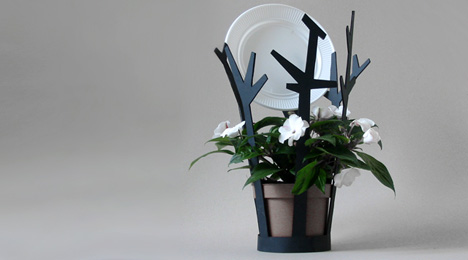
&Waste Not That Drip Water


Did you know you potentially waste gallons of water every year just from your dishes drip drying? It’s true. Why not put that drip water to good use by using the Planter Dish Drip. It’s plastic and can hold several dishes at one time. The water drips into the plant below so everyone’s happy. A total win-win situation. However clever you think this is you may have to wait to get one because for now, it’s just another concept from Erdem Selek.

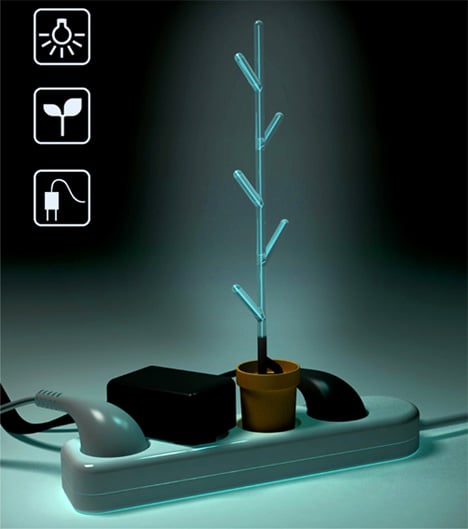
Imagine an Illuminated Forest


Scared of the dark? You could carry a flashlight but why not something a little cuter? The Light Tree is a small night-light. Sure it takes up one whole plug but look at it! Awww, so CUTE. Truth be told the designer had some “green” intentions. It’s supposed to inform you about the importance of energy conservation by using the international symbol for eco-friendliness; a tree. The logic is a bit convoluted but OMG it’s ADORABLE and look! The 110v adapter is a pot!

2009年5月2日 星期六

share-crutch factor


The Collapsible Crutch is designed for nearly all users regardless of their height. The design also increases the load bearing capacity of the crutch. Perhaps the biggest improvement are the collapsable shafts making storage less of an issue when moving in/out of vehicles. They’re still unwieldy looking but if I can sit down in a movie theater or restaurant without awkwardly resting my crutches to the side, I’m all for it.


&spiritual rocking


most of the time we think of prayer asa static activity. some orthodox jews use arocking motion called ‘shukkeling’ whenpraying on the ha'shem.there are mixed explanations of this tradition;some believe that at the beginning of theproduction of scriptures there were fewbooks for everyone to read so the rockingmotion reflects an old custom of taking it inturns to look at the pages.others might say that the motion of shukkelingis a way of enhancing concentration orthat the words are igniting the soul like thelighting of a wick and so the body moveslike a flame.
in some cases rocking is a proportionalphysical and spiritual response to prayer.just as we might nod our head or tap ourfeet in time with a piece of music,some find that the saying of prayersstimulates a physical rocking motion.
the spiritual society of the ‘shakers’ hasthe most impressive rocking tradition.rockers are part of all life stages -a craddle for the new born; a rocking horsetoy; a rocking stool for work in thehousehold of the community; a rocking chairfor leisure time, social meeting and readingof spiritual texts;an adult-size craddle forill, weak or aged invalids.the gentle rocking movement helps to calm theirspirit and prevent from bedsores.the rocking motion closes the circle of life,from birth to death!

2009年5月1日 星期五

Wabi-sabi | 侘・寂

SE7EN中國傳統美學特點探討中的評論中提到:“日本茶道宗師千利休,以一己之力扭轉世風對浮誇奢靡的欣賞,引導人們轉而學會欣賞‘間’、‘秘’、‘素’、‘減’,禪寂之美。”今天剛看到 emmas 上在說 Wabi-sabi,Wabi-sabi 在日文裡就是侘(wabi) 寂(sabi),與今天的漢字含義已經相去甚遠了,為通俗我們或可以用“禪寂”來代替。Wabi-sabi 是日本傳統文化、美學、世界觀、思想哲學的最鮮明的一個根基,深刻影響著世代日本人,雖然很少有日本人會將 Wabi-sabi 解釋清楚,但 Wabi-sabi 是他們身上的東西,可意會不可言傳。他們沒有用哲學理論去解釋過,也沒有寫進教科書來傳授,或許這讓東方式哲學 Wabi-sabi 流傳更廣,影響更深,千利休在茶道上將 Wabi-sabi 發揚光大,普及大眾。
Wabi-sabi 描繪是的殘缺之美,殘缺包括不完善的、不圓滿的、不恒久的……現今一般也可指樸素、寂靜、謙遜、自然……Wabi-sabi 源自佛法(小乘)中的三法印(一、諸行無常、二、諸法無我,三、涅盤寂靜),尤其是無常。Wabi (侘)原指遠離塵世,索居禪林的孤寂,sabi (寂)原指“寒”“貧”“凋零”。到了14世紀,這個詞的含義就轉向了積極的一面,茶道宗師千利休將 Wabi-sabi 融入茶道,並為 Wabi-sabi 的推廣和發展做出了最偉大的貢獻。千利休在58歲時成為織田信長茶道師,在織田信長死後成為繼位者豐臣秀吉的茶道師,千利休就在擔任織田信長和豐臣秀吉的茶道師的20年間發揚的 Wabi 茶道,使用小而樸素的茶室,竹制茶具,將日常物品用於茶道,用簡潔質樸的茶具代替來自中國的華貴器具……後雖為豐臣秀吉親信,但因茶道理念不同,被命令剖腹自殺,死於1591年2月28。(wikipedia
Wabi-sabi 同佛教中的智慧一樣,可意會不可言傳,所以這個詞用語言來表達時,有很廣的包容性。emmas blog中說到,wabi 是在簡潔安靜中融入質樸的美(比如竹子、稻草、泥土、石頭中的圖案),sabi 指時間的光澤,比如一件物品在使用中提升了它的價值和美。文章也引用了 Leonard Koren 介紹 Wabi-sabi 一本書《Wabi-Sabi: for Artists, Designers, Poets & Philosophers》的一段話:削減到本質,但不要剝離它的韻,保持乾淨純潔但不要剝奪生命力。文章後有一些連結文章可供參考閱讀,這裡有幾篇對基於Wabi-sabi的日本文化的解讀(中文)。
題圖來自這裡,Flickr 上有一個Wabi-sabi 的群組,可通過圖片來意會意會。對於我們,可以通過比較對讀來獲取啟發。

關於傳統

例外一次,圖片之下直接貼個音訊,而且不是 Youtube 的,對 Youtube 不能訪問表示強烈不滿和不解。這張圖片來自 Boston The Big Picture 的“春的腳步”( Signs of Spring ),轉貼音訊為查拉圖斯特拉如是說的日出,沒錯,就是和我們前文 Hemeroscopium House 的G點 提到的《2001太空漫遊》相連了,一旦你注意到,它就會縈繞在頭,這也是形式的力量。理查·施特勞斯是後浪漫主義代表人物,我喜歡浪漫主義,甚至覺得我們就缺浪漫主義精神。

又說回傳統,這可能不可避免成為我們一個長期的話題,通常是一觸即發,說著說著就說到那裡去了,比如在 iDESIGN 上。我想我們是否可以一步步深入的討論交流下去,應該不會讓人討厭吧?

可是我非常討厭多數主流大眾媒體對傳統的鼓吹或蠱惑,一些甚至可以認為是迷信,那種閑坐說玄宗,恨不得穿越的情懷,把住一個墳頭俯視今世的姿態,對那種泛泛的鄉愁也膩歪了。當然,我們要理解其合理部分的合理性,比如說鄉愁是因為對現代生活的情感或質感的稀缺的一種投射。但這些是不是看上去像在產品上刻一個水墨畫就宣稱其中深蘊的傳統精髓一般?稱之為傳統的元素和符號拼貼式的設計?

但是我不反對傳統元素和符號的拼貼,而且是非常支持,這也是在 iDESIGN 上討論中我的想法(一些表述不在此轉貼,點選連結查看大家的討論)。但這和上面說的拼貼有什麼區別呢?我贊成的拼貼是出自自我的真誠,比如就是想如此表達,而反對的不是拼貼的技法,而是在拼貼的結果上刻意附加不知所謂的意義。何為“不知所謂”,就是你不太清楚,我也不太清楚,都說是傳統精華,那肯定是好東西了。創作者和受眾都因不知所謂而崇敬起凡是貼有傳統精髓的東西來。明式的,好啊,山水畫,好啊,氣韻生動,好啊……專家說好,好啊,教授說好,好啊,CCTV說好,好啊……

如此現象的原因,不知傳統為何物,是一個顯而易見的原因,當自己不知別人知道的時候,會把別人知道的當作答案,因為沒有評判標準,為什麼沒有評判標準,因為自我的缺失,當自我缺失的時候,面對一個自己不知而別人知道的東西,會如何?我們對傳統的理解中或者對傳統的認知有多少是靠這種模式積累起來的呢?

什麼導致自我的缺失,“獨立之意志,自由之精神”。難道我們就坐等第三次思想解放嗎?

我們只說設計,說傳統的發揚,我覺得對自我再認識也就是自我解放。傳什麼統,從哪開始傳……?儒道釋?書法?文人畫?仁義禮智信?……如此就再一次陷入了上面所說的自我缺失,我們不也經常說土壤的缺失,那土壤是誰搞掉的呢?有我的一份嗎,我可是改革開放後出生的?我們也經常說到,傳統在哪裡,在每個人的血液裡,但這不是說說即可,我們還需知道是什麼。為了防止自我缺失,從自我下手或許是最直接的,當你來再認識自我的同時,也在認識一個普遍的自我,那麼有什麼參考,普世價值?……

Hans Wegner 設計如此優秀,他考慮過中國傳統什麼的沒?放下自己給自己添加的包袱,用真誠來表達自我,追求自我表達就是浪漫主義。

2009年4月30日 星期四

When East Meets West


from Milife design

2009年4月29日 星期三

Share-Life straw


From:Design for the other 90%

About half of the world’s poor suffer from waterborne diseases, and more than 6,000 people, mainly children, die each day by consuming unsafe drinking water. LifeStraw, a personal mobile water-purification tool is designed to turn any surface water into drinking water. It has proven to be effective against waterborne diseases such as typhoid, cholera, dysentery, and diarrhea, and removes particles as small as fifteen microns.


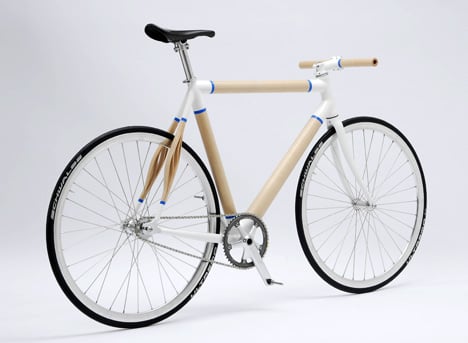
Would a Woodchuck Chuck a Bike Made of Wood?


Wood frame bikes have long given way to aluminum and space age materials but designer Arndt Menke thinks we were too hasty in giving up on one of the strongest, resilient, and lightweight natural materials. There are over 60,000 woody plants worldwide but we use less than 300 of them in a terribly unsustainable way. The Holzweg bike’s frame is totally made of wood and weighs a scant 2.3kg. Could wood frame bikes make a comeback?
This diploma thesis for Menke’s master’s degree demonstrates how careful attention to wood’s natural retention, expansion and anisotropic properties can be advantageous in design. The end result is an incredibly light weight bike, strong and pretty darn good looking too. I really want one.

2009年4月28日 星期二

Human-Centered Interaction Design Lab, Kaist


HCIDL (Human-Centered Interaction Design Lab) focuses on planning and developing human-centered interaction through in-depth research for physical, cognitive, emotional, and socio-cultural aspects of human being.


Research interests include ‘Design Planning' for developing innovative design strategy and concept through user-centered design, contextual inquiry, and future research; ‘User-Interface Design' which focuses on developing and evaluating user-interface design by understanding user's cognitive information process: ‘Emotional Design' for user's emotional satisfaction; ‘Cultural Design' for reflecting user's socio-cultural characteristics on design.

In order for systematic application on research interests, HCIDL develops diverse design tools and software such as video-annotating program for user-observation, remote usability testing program, mouse tracking software, wearable camera for understanding mobile-user's behavior. HCIDL is harnessed with state of art facilities including usability testing room with full equipment of video recording and observation tools, gaze analyzer, and portable ethnographic tool kit for user-observation.


The department of Industrial Design at KAIST started off with the foundation of KIT: Korea Institute of Technology in 1986. With 30 freshmen year students, the faculty was Korea's first design faculty within an engineering school environment. A Master's degree program was established in 1991 followed by a doctorate program in 2002. Since then the department has structured itself with a systematic integration of undergraduate and graduate programs.The department is now preparing to embark as an internationally respected design school, after successfully producing 257 undergraduates and 107 graduates(2003) who are actively contributing the Korea and world design community.

Rubik Cube for Blind by Zhiliang Chen


There are six different basic materials involved. They are Metal, wood, textile, rubber, plastic and stone. Different materials give people different senses, which thus enabled the blind men to play. And here we present the very example of this inspiration - The new Rubik Cube.
Designer: Zhiliang Chen

2009年4月27日 星期一

Hi~hi!

Hello ,my name is 李翊禾(Li Yi-he),or you can call me 由希 (yo-shi)
I am pursuing the master degree at industrial design department of NCKU now.

and...welcome to Taiwan!!


Jia Xu's introduction

Hello new friends and old friends. This May will be my first time to be in Taiwan, I am so excited about it. Here is my blurb, hope you can know me more easily through this.

Jia Xia (賈旭) received a Bachelor's Degree in Industrial Design from Tsinghua University, China in 2008. He is now pursuing his Master of Science in the Industrial Design Department at the Korea Advanced Institute of Science & Technology [KAIST], Daejeon, Korea He works as a researcher in the Human-Centered Interaction Design Lab in the same Department. He won the 1st prize in Lenovo 'Future Office PC Competition' in 2007 and got in the final 8 of Simons Navigation UI Competition in the same year. He has also participated in many national and international design and research activities. He worked as an intern researcher and designer at Li-Ning Sports Wares Corporation in 2007, at the China Color & Fashion Association in 2006 and at LG Electronics China in 2007.

I have tons of interest and am always happy to know new people. See me at Fackbook via http://www.facebook.com/profile.php?id=613306469. Also an email to xuujia [at] gmail [dot] com is welcome.

Btw, my team, Ren-ascence rocks! Good luck and see everybody soon!

hey!


Hello! My name is Chun-wei Chang 張君瑋
or you can call me Zoe if you want. :)
I am a junior from NCKU ,Taiwan.
Besides design, I also like traveling ,Shopping,and photography.

This is my first time to joint a design workshop.
It's kind of nervous and exciting.
My excaptation of this workshop is I could learn a lot from my partner and all of the student who are from different nation. And being friend! :)
If you have any qustion (about me or snacks of Tainan... :P)
Welcome to contect me!


2009年4月19日 星期日

Hello world

This is the first post.

We are team Ren-aissance from international deisgn workshop 2009 in NCKU. We will share our progress and thoughts about design, Taiwan, Ren and etc here. Hope you can enjoy: D